In January, the Reuters Institute predicted where the industry was heading. Some trends have accelerated quickly, while others seem to be more complicated than expected. But what does this picture look like six months in? Here's our honest mid-year read.
Search traffic is falling, AI is now a daily reality, and audiences keep shifting — all faster than predicted. For newsrooms, keeping up means more than new tools: it means building integrated systems that let journalists focus on storytelling. That's what IBC2026 will be all about.
In this article, we will focus on some of the trends specifically relevant to the newsroom technologies and news production. See the full list of predictions here.
1. Search traffic collapse: faster than predicted
The prediction: The Reuters Institute predicted that publishers expected search referral traffic to go down by 43% over the next three years. By that point, Google Search traffic to news sites had already dropped 33% globally and 38% in the US between November 2024 and November 2025. The reasons are worth unpacking: AI-generated answers are reducing the need to click through to source articles, while a growing share of audiences simply prefer to consume news where they already are: in social media feeds rather than on news sites directly. Both trends are explored further below.

Halfway through 2026, this trend seems to be accelerating more quickly than expected. A new report published by Axios in March 2026 shows search engine referral traffic has been in decline since 2024. For small publishers, it dropped by 60%, for medium-sized publishers by 47%, and by 22% for large publishers. When we look at the numbers in 2026, the data suggests that the numbers are on a steady decline. That is especially relevant for smaller publishers: they can no longer rely on search engine optimization only to be discovered by audiences. This indicates that there is a need for new ways of offering value to readers.

Source: Axios / Chartbeat, March 2026
A Similarweb analysis reported by Pitchonnet in May 2026 discovered that 43 of the world's top 50 English-language news websites recorded year-on-year traffic declines, with 47 of those 50 seeing month-on-month drops in April alone. WAN-IFRA's World Press Trends Outlook 2026 claims soaring 41.9% of publishers are already losing traffic from search engines.
Important nuance to note: even though AI chatbot referrals are growing (e.g. ChatGPT referrals grew by over 200% in the past 2 years), they still account for less than 1% of all page referrals. That means they do not yet fully replace the search traffic. That 1% figure may seem surprisingly low — but it's worth noting that publishers can now opt their content out of AI Overviews while remaining indexed in regular search, and many are choosing to do exactly that. So the number may reflect not just slow AI adoption, but an active industry pushback against AI citation.

Sources: Axios / Chartbeat, March 2026
How does the industry respond?
Publishers now focus on building direct audience relationships through their own digital infrastructures, newsletters, apps, and community platforms. WAN-IFRA's World Press Trends Outlook 2026 found 62.9% of publishers are optimistic about the next 12 months; optimism achieved through internal innovation, rather than a focus on reacting to shifts in external platforms.
The question is whether they can move fast enough.
2. Agentic AI: moving from pilot to production floor
The prediction: The Reuters Institute predicted AI shifting from back-end efficiency tools toward "Agentic AI" - systems that execute complex, multi-step tasks autonomously within newsroom workflows.
This trend has clearly picked up pace. NAB 2026 has shown that we barely scratched the surface of AI capabilities in the newsroom. It’s no longer being positioned as a future add-on. Instead, agentic capabilities of AI are now embedded directly into production across all stages of production workflows. The key takeaway from the show: AI is becoming operational, not experimental.
The WAN-IFRA World Press Trends Outlook 2026 found that 75.8% of publishers now describe their AI usage in newsroom workflows as either "advanced" or "emergent". This is a significant shift from where the industry was last year.

Sources: WAN-IFRA / Twipe, Jan 2026
At the industry level, AI is now one of the main focuses of research. The IBC 2026 Accelerator programme selected SMART STORIES: The Agentic Production Ecosystem as one of its headline projects. While AI is developing fast, most tools operate in isolation.
Story Object Model
A consortium of AP, NBCUniversal, ITN, BBC, Channel 4, Al Jazeera, Washington Post, Sky and ITV set the goal to give AI agents “a shared understanding of what a story is, what's happening, and what matters”. In other words, AI is now seen as a tool within a story context, and for that to work, it needs an open standard from newsgathering to distribution. Cuez is a participating technology partner alongside EVS, Shure and Moments Lab. The consortium is working on what is named SOM (Story Object Model) - a way for AI agents to communicate with each other regarding changes in a story and then perform and automate appropriate responses.
This builds on award-winning proof-of-concept work that's already been tested in production. The "AI Agent Assistants for Live Production" project demonstrated that AI can operate as an active teammate in the control room. That project was named IBC Accelerator Project of the Year at IBC2025.
3. Platform shifts: complex reality
The prediction: The Reuters Institute predicted publishers would increase investment in YouTube (+74 percentage point difference between ‘more’ and ‘less’ effort), TikTok (+56) and LinkedIn (+40), while pulling back significantly from X (−52) and Facebook (−23).
NAB 2026 confirmed that multi-platform is becoming the new standard. NAB presented an expanded Creator Lab and significant floor space dedicated to vertical video and mobile workflows. Instead of targeting separate channels, broadcasters are now focusing on so-called ‘ecosystems’, where content is created simultaneously for multiple platforms.
The reality, however, is that distributing the same story across a broadcast rundown, YouTube, a TikTok clip, and a newsletter requires either more people or smarter systems. Most newsrooms are leaning towards the latter and focus on scalable infrastructure and smart automations.
With the platform shift, broadcasters need to find ways to optimize their production. Doing more with less is not just an option anymore. It’s a must.
What will IBC2026 tell us?
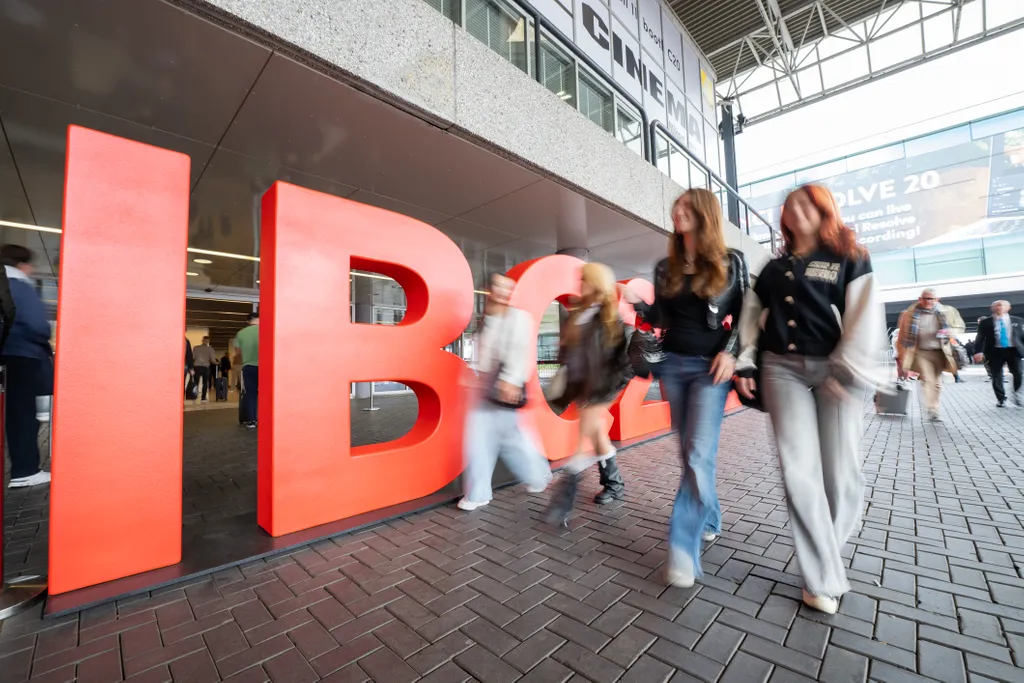
IBC2026 (September 12–15) is going to be one of the most consequential shows in several years for broadcast newsroom technology. The SMART STORIES Incubator will present its first public findings on agentic production standards. SOM is also expected to demo live at IBC after a summer of broadcaster and vendor hackathons.
IBC's own technical paper programme is already challenging the assumption that AI in journalism is only suitable for routine tasks, so we expect sharp debates on where automation ends and editorial judgment begins.
The bottom line
Six months in, the trends the Reuters Institute identified are real. But reality is more complex than expected.
Search traffic is declining faster than forecast; AI is moving from the pilot phase into daily operations; newsrooms need to do more with less; the platforms audiences actually use keep shifting.
These trends indicate a fundamental shift within the industry: instead of just adopting new tools, newsrooms now need to build integrated systems that would allow journalists to focus on storytelling, if they want to keep up with the industry expectations and demands.
This is what IBC2026 will be all about. And this is the conversation the industry wants to (and needs to) be having right now.
Sources: Reuters Institute Trends & Predictions 2026 · Axios / Chartbeat, March 2026 · Pitchonnet / Similarweb, May 2026 · WAN-IFRA / Twipe, Jan 2026 · PlayBox Technology / NAB 2026, April 2026 · ProAudio.tech / IBC 2026 Accelerator, March 2026 · Cuez / IBC2025 Accelerator Project of the Year · IBC Show Accelerator Project

Ecaterina Caprari
Content Marketeer